The story-telling process (and not the end result) is where to put your focus
…I may have been quiet, but, cor, have I been writing! I’m at the 65k word mark on a comedy novel, and loving the hard graft you get when crafting a story. This is my second prose adventure (the first is in the polishing stages) and I think I’ve found it surprisingly different to scriptwriting. But why? How? Aren’t they just different expressions, formats, of the exact same thing?
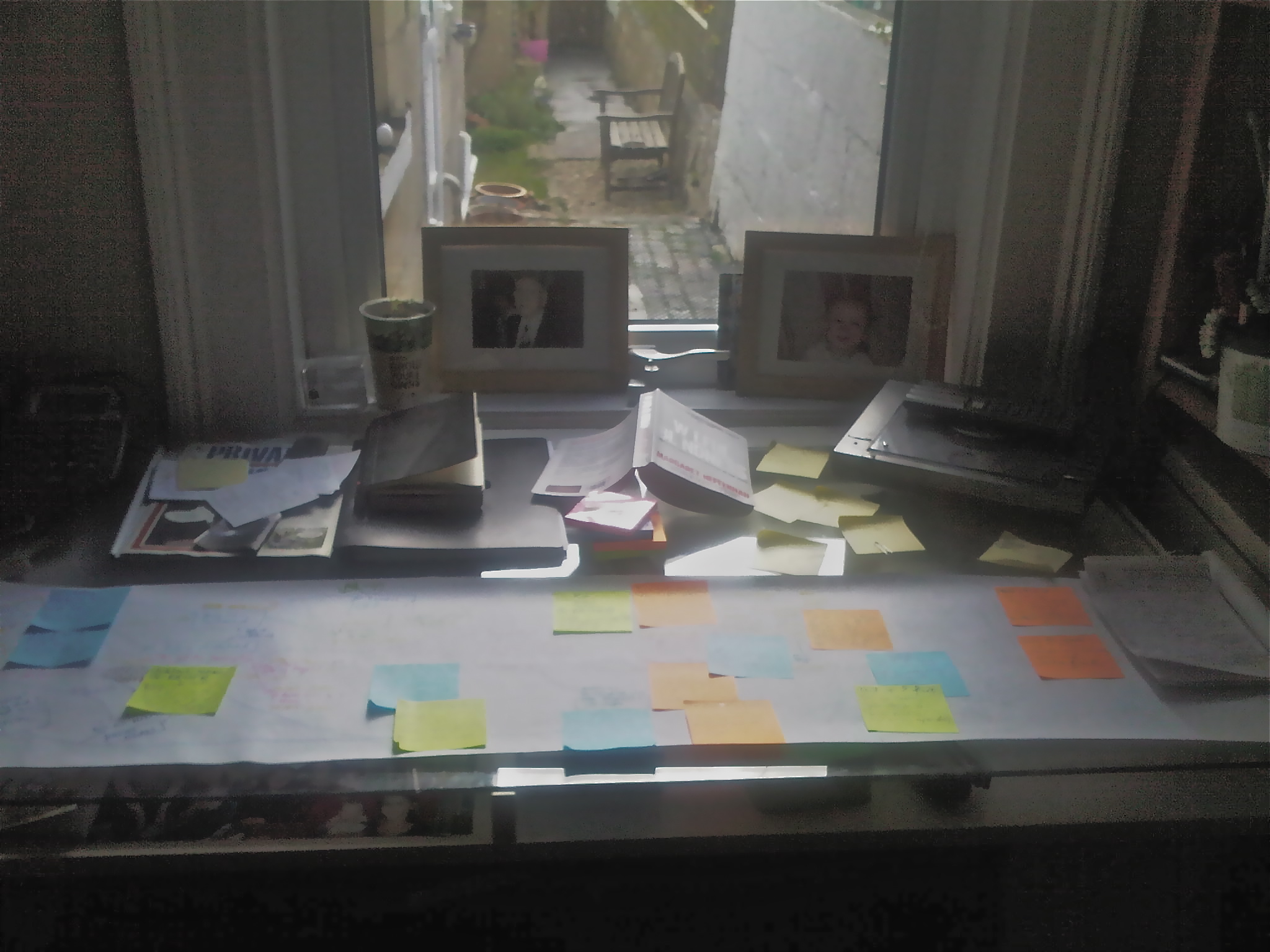
Let’s delve. First – scriptwriting – how do I do that? As you can see from various older blogs, that varies. My much-loved “FFS” (a recent TV pilot about a later-career gossip columnist who has a growing suspicion that she’s being trolled by a God she doesn’t believe in) came into clearer and clearer view like truth through fading fog. Dark-green climate catastrophe satire “Skin In The Game” whispered itself to me scene by scene over 8 hours while I climbed mountains in the Scottish Highlands (it’s a weird thing, but it works!). “Glitter Knickers” came from a mythical-heroine’s-journey Q&A process, and ‘Water’s Not So Thick started with a true story. And “Box” was a brain-dump of scarily disconnected ideas that had to be heard, finding their connection through wool-spirals on the living room floor.
Every time, though, structure keeps me sane. I like a climbing frame for my adventure – a trellis for my tendrils. My prose-writing turns out to be the same – BUT… what’s different? I’m no prose expert, but here’s what I’m noticing:
- The need for TV/film-like balance between shifting points of view. Variety is expected much more on screen and in books than it is on-stage. Obvious, when you think about it. (Genre plays a part here, as everywhere, of course.)
- MUSCLE! Oh, boy, yes. With stage and screen, a script is one part of the creative process. I’ve been constantly bowled over throughout my career by the genius of directors, actors, designers, lighters, musicians, because every time they have elevated the audience experience I’d brought to the table. A staged/filmed entertainment is the work of many – not just you. But in a novel? Guess what… Yes – everything is up to you. Every single terrifying choice that builds a believable and compelling world: you cast it, site it, light it. You move the characters, pick accents, and tics. You slow it down, you speed it up.
- All the jobs that on stage or screen, others get to do – 99.9999% adding to your work – you have to do them all – until you’re fortunate enough to find agent/ed/publisher & marketing champions, of course. This is a lonelier – and bigger – job.
- You have to accept, this is hard. But it doesn’t make it horrible or too big for you. Just bigger than something you / I have done before!
So why am I doing this? Let’s remember that after draft 1, as I’m not an agented novelist (yet? hi, future me!) I have to go through it several times to make it better and better and better. And if it’s coming in at c80,000 words, that’s a lot of trees to look at before I can see the wood. So, again, why?
Because stories matter. And every story has a natural format – at least for its ‘birth’. I’m learning lots, I’m growing new writer muscles, I’m forced to go slower, and challenge myself without throwing a creative hissy-fit. And, let’s be honest here – this is fun.
Writing creatively is always a conversation with your self. If you can make it a conversation with others, too, that’s wonderful. But global reach isn’t the goal – there are other ways to impact millions of lives, after all. Stories are a way of finding truth, reaching insight and generating warmth. These things matter greatly. Since humans began, when we’ve aimed for truth, insight and warmth, the stories have always followed, strong, bright and lasting.


 Gill Kirk, writer
Leave a reply to Gillian Kirk Cancel reply